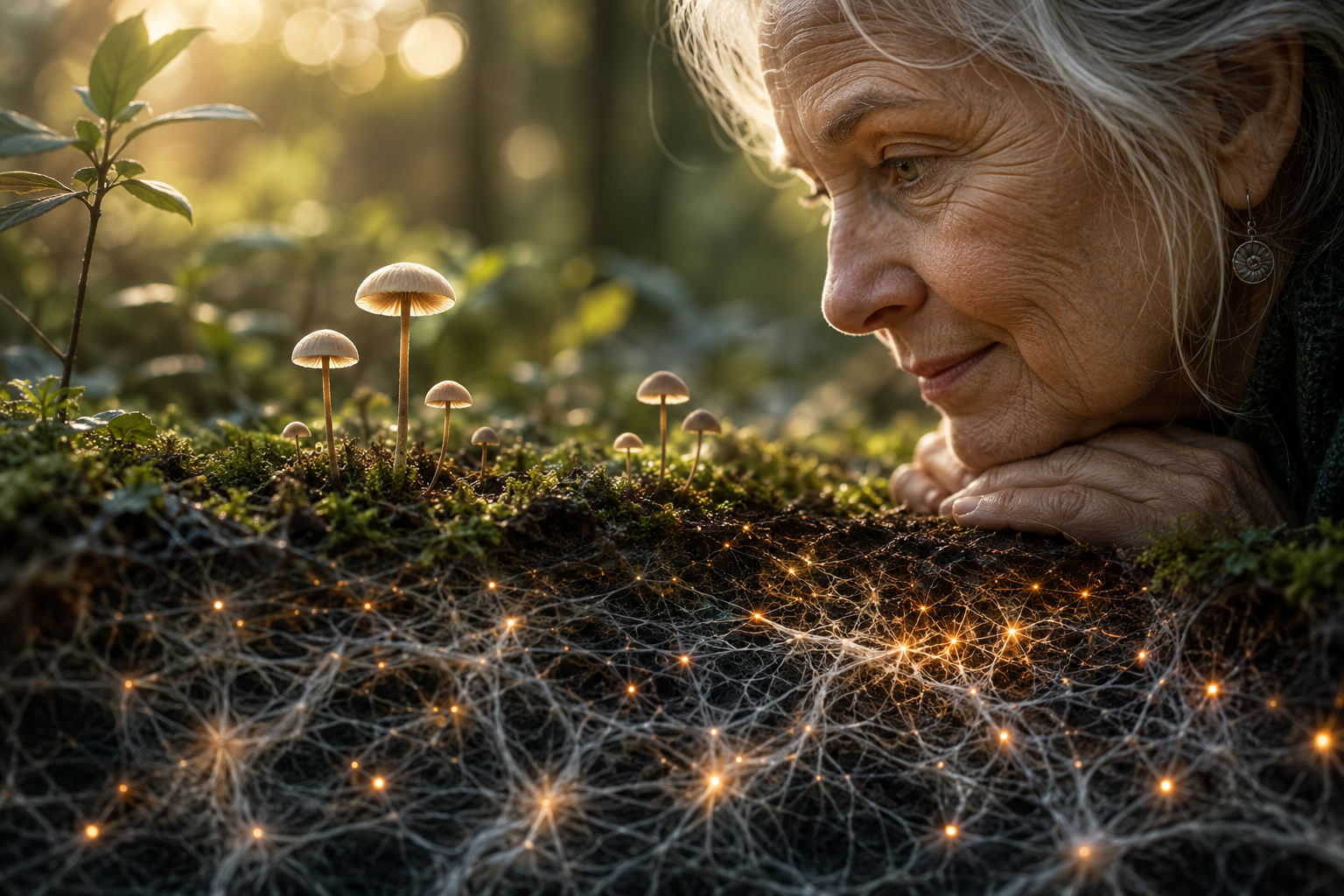
Recently, I did two things that made me feel vulnerable. The first was sharing one of my TikTok videos about sovereignty into my Facebook community. My intention wasn't to promote myself. It was simply to introduce a concept that has become increasingly important in my own life. The second was reaching out to a woman on LinkedIn who had engaged thoughtfully with a recent post I wrote about the pain of invisibility. I tagged her in a video I had made about mycelial networks and then sent her a message explaining why I thought it might be relevant to her interests. I also let her know that if it wasn't useful, I would happily remove the tag. Neither action was particularly dramatic. Yet both felt exposing. Whenever we do something new, there is often a moment where we feel as though we are stepping onto a stage and waiting for the audience to judge us. Will people like it? Will they respond? Will they ignore it? Did I get it right? For much of my life, I have unconsciously evaluated my actions through the lens of results. But lately I have been experimenting with something different. Curiosity. Instead of asking, Did this work? I am asking, What happens? Who engages? Who doesn't? What resonates? What questions emerge? What surprises me? The action itself hasn't changed. I still shared the video. I still sent the message. What has changed is the lens through which I view those actions. Curiosity turns every outcome into information - a positive response is information, silence is information, and disagreement is information. Nothing is wasted. This feels particularly important as I continue to build Mycelatrix and explore new ways of sharing ideas about sovereignty, leadership and transformation. There is no guaranteed pathway. No formula. No certainty. There is only participation and observation. A few days ago, I noticed mushrooms growing in unexpected places around my home. They reminded me that fungi fruit when conditions are right, often in places we would never think to look. The visible mushroom is simply evidence of an invisible network already at work beneath the surface. Human connection can be much the same - a comment on a post, a direct message, a conversation, or a new relationship beginning to form. Rather than asking, "How can I make this happen?" I am learning to ask, "What is emerging here?" Perhaps this is one of the gifts of growing older - moving from performance to observation, from control to participation and from judgement to curiosity. And perhaps sovereignty itself is, in part, the willingness to step forward, try something new, and then simply pay attention to what unfolds.

One of the most challenging lessons of sovereignty is this: we cannot fully claim our power while denying our agency. At first glance, that may seem obvious. Yet many of us spend years telling ourselves stories about what we had to do, what was expected of us, or what circumstances demanded of us. Particularly as women, we're often conditioned to put the needs of others ahead of our own. We learn to help, support, accommodate, smooth things over, and carry responsibility. We become the reliable one, the caring one, the one who steps in when nobody else does. And often, these qualities come from beautiful places within us: compassion, loyalty, generosity, kindness, and love. But over time, something else can emerge: resentment. We begin to notice that others aren't carrying the same load. We feel unseen, exhausted, or taken for granted. We look around and wonder why no one else stepped up. These are valid observations. There may well have been others who could have helped. Others who should have contributed more. Others who chose not to act. Yet sovereignty invites a different question: What did I choose? If I stayed late to finish the work, that was my choice. If I stepped in to care for someone because I couldn't bear to see them struggle, that was my choice. If I carried the responsibility because it mattered deeply to me, that was my choice. Acknowledging this is not about blame. It's not about pretending circumstances were fair or that power dynamics don't exist. It's simply about recognising our own agency. This can feel confronting because it challenges a story we may have told ourselves for years: I had no choice. But often, the truth is more nuanced. Perhaps we did have a choice, but the alternative felt uncomfortable. Perhaps saying no felt selfish. Perhaps disappointing someone felt unbearable. Perhaps we feared conflict, rejection, or judgement. Perhaps we genuinely wanted to help. Whatever the reason, a choice was still made. And hidden inside that recognition is freedom. Because the moment I acknowledge that I chose something, I also acknowledge that I can choose differently next time. I can honour the reasons I said yes. I can recognise the values that shaped my decision. I can acknowledge the cost. And I can decide whether that choice still aligns with who I am becoming. This is not a call to become less caring or less generous. It's not an invitation to withdraw from service or responsibility. Rather, it's an invitation to become conscious. To recognise when we are choosing. To own those choices fully. To stop telling ourselves that we are powerless participants in lives we are actively creating. Perhaps sovereignty is not only about learning to say no; perhaps it's also about being willing to own every 'yes'. Because the same agency that allowed us to make a choice in the past is the agency that allows us to choose again in the future. And that may be one of the greatest freedoms available to us. Not the freedom to avoid responsibility, but the freedom to recognise that our lives are shaped, moment by moment, by the choices we make.
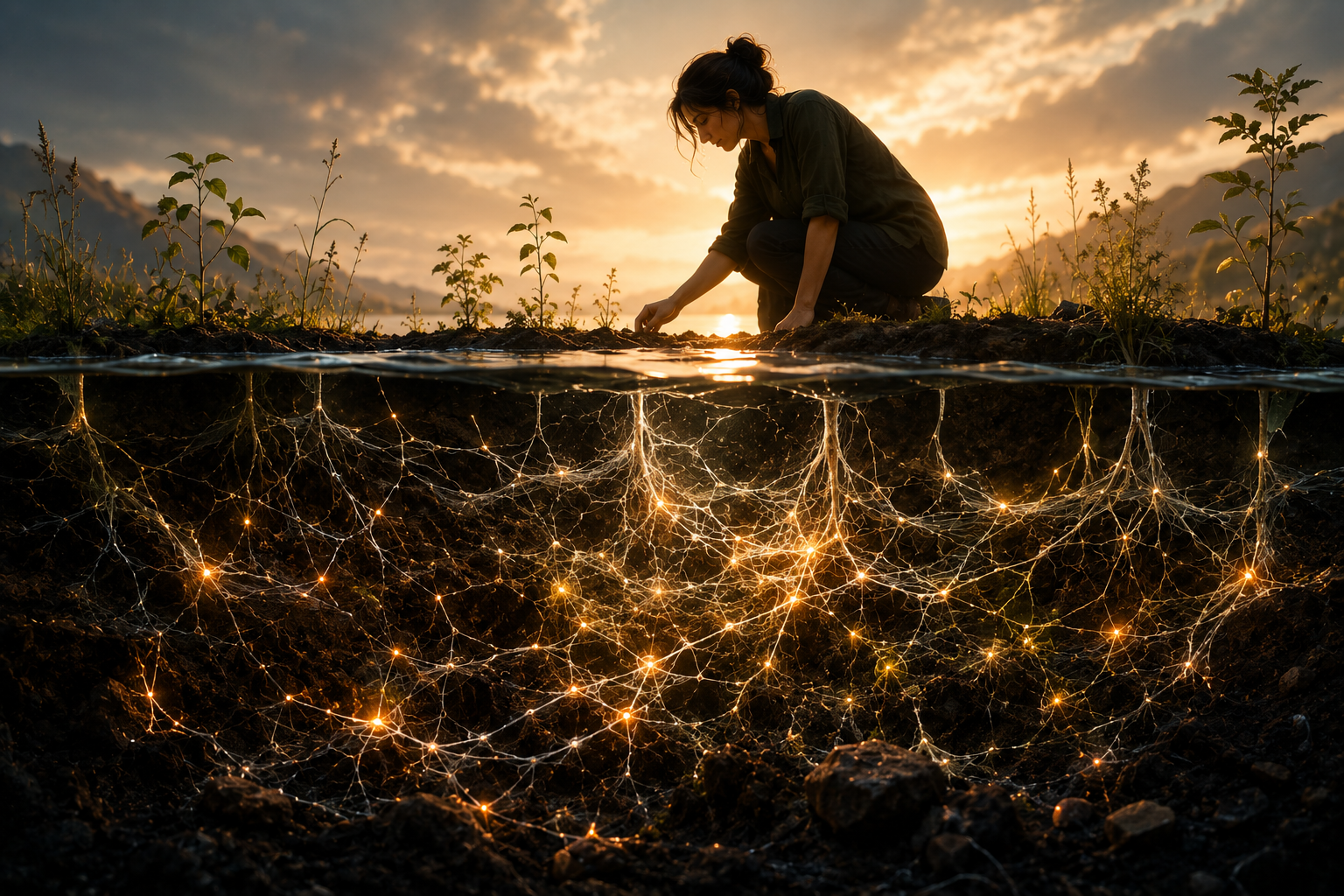
People sometimes ask me what I actually do. Do I speak on unconscious bias? Women’s leadership? Authentic leadership? Mycelatrix? Hidden influence? Organisational culture? On the surface, these can appear to be different streams of work. But I’ve come to realise they are all asking the same question: What lies beneath the surface, and what influence does it have? In my unconscious bias work, I explore the unseen forces that shape our decisions, interactions and systems: What assumptions are operating automatically? What inherited messages are influencing us without our awareness? What hidden patterns affect who is included, promoted, trusted or overlooked? What small moments accumulate over time to become culture? Because culture is rarely created through one grand gesture. It forms in thousands of tiny interactions: who is listened to, whose ideas are credited, who feels safe to speak, who quietly disappears into the background. The unseen shapes us. Yet I’ve realised that this same question sits beneath my work with women. There, I ask different questions: What unseen strengths are women already carrying? What capacities have been dismissed, hidden or conditioned out of visibility? What quiet actions shape teams, relationships and culture? What invisible labour is holding organisations together? I have seen the woman who notices tension in a meeting and gently shifts the dynamic. The colleague who connects two people who need each other. The leader who creates psychological safety. The person who remembers values when everyone else remembers metrics. The one who notices who has not spoken. The one who cultivates trust over years. Many people take these actions for granted because they can look small. They are often quiet. They don't always appear on performance reviews or organisational charts. But I have come to believe these things are not secondary. They are infrastructure. And this is where the bridge between my work became clear to me. These two streams are mirror images of one another. One uncovers hidden limitations . The other uncovers hidden power . Both are acts of seeing. Too often, bias work begins with the question: "What is wrong that we need to fix?" But increasingly my work asks a different question: "What is present that we have failed to notice?" Because beneath the surface there are inherited narratives, blind spots and biases that constrain us. But beneath the surface there is also wisdom. Intuition. Relational intelligence. Pattern recognition. Courage. Trust-building. Quiet influence. In both cases, the unseen is exerting influence. The difference is that one asks: "What hidden forces are limiting growth?" And the other asks: "What hidden forces are enabling it?" Perhaps that is the thread connecting all of my work: Shining a spotlight on blind spots. Uncovering superheroes in disguise. Seeing the hidden networks beneath the surface. Different language. Same movement. See → Understand → Choose → Lead Because my work has never really been about changing people into something else. It has always been about helping them recognise what was there all along.
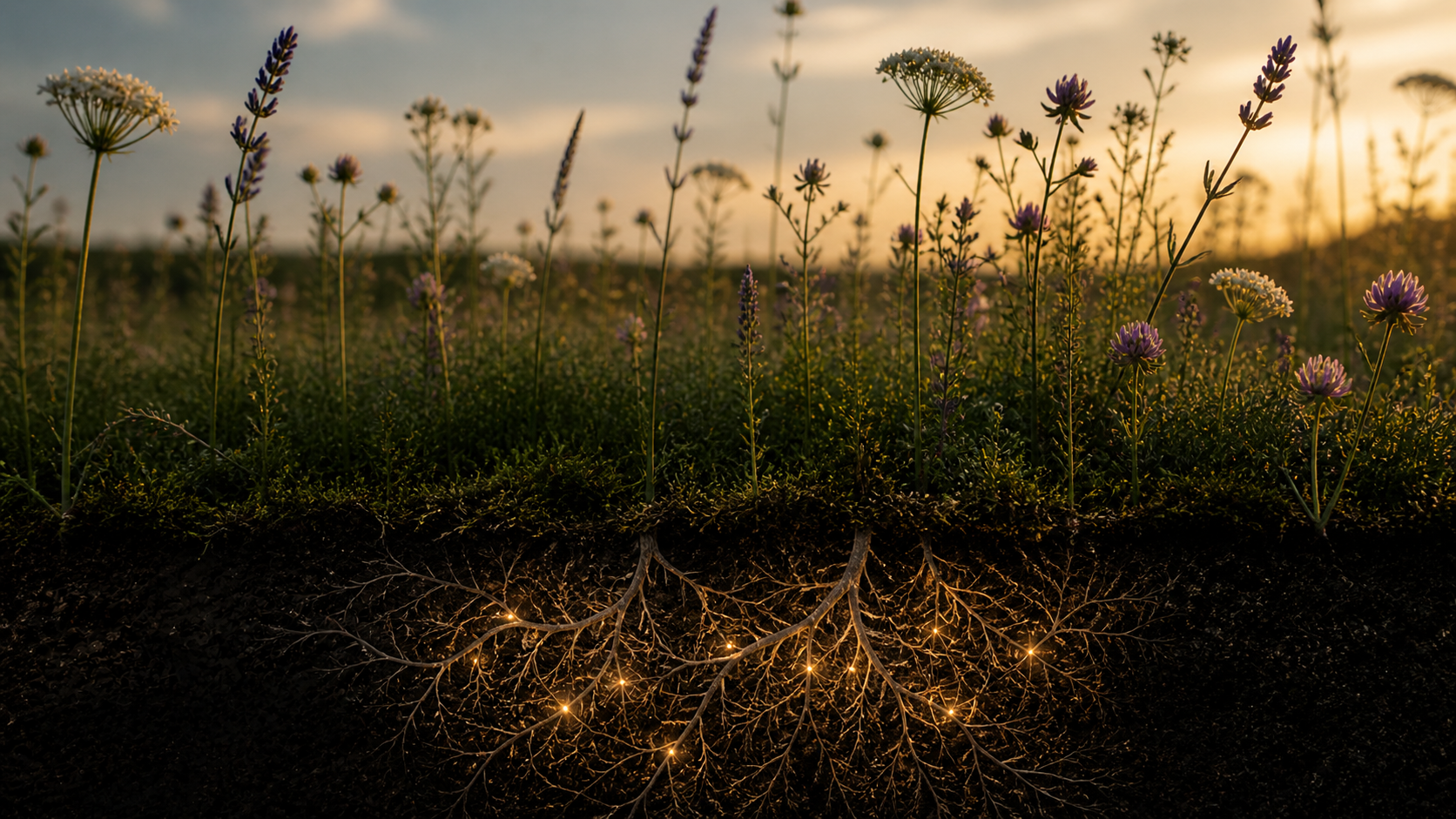
For many years now, I have named my three core values as courage, creativity, and connection. They have appeared in workshops, keynotes, leadership conversations, and coaching sessions. I have spoken about them often. Yet recently, I have realised something deeper: these values are not simply ideas I teach. They are the architecture beneath the life and work I am now building. Looking back, I can see that much of my life was spent operating within systems that measured success externally. Achievement, visibility, qualifications, titles, recognition, productivity, and performance all carried weight. Like many women, I learned early to seek legitimacy outside myself. I learned to trust institutions, systems, and recognised authorities more readily than I trusted my own instincts. But something has been shifting. As Mycelatrix™ has emerged, I have found myself moving away from externally imposed models of success and towards a more integrated, internally coherent way of living and working. What I am building now is not based on hustle, constant striving, or proving my worth through endless visibility. Instead, it is growing organically through resonance, relationships, ideas, and trust. And at the centre of this shift sit those same three values. Courage no longer looks only like standing on stages or speaking difficult truths publicly, although it includes that. Increasingly, courage looks like trusting my own perception. It looks like allowing myself to think beside authority rather than beneath it. It means being willing to see the world differently, even when that perspective does not fit neatly within dominant systems or expectations. It means no longer apologising internally for being who I am or for wanting to operate differently. Creativity, too, has expanded in meaning for me. It is not simply artistic expression. Creativity is the ability to see connections between ideas, systems, people, and possibilities. It is allowing new structures to emerge rather than forcing everything into old frameworks. My work now sits at the intersection of leadership, unconscious bias, shame, feminine systems, ecology, story, and transformation. Creativity is what allows these seemingly unrelated threads to form something living and coherent. And then there is connection. Not networking in the transactional sense, but genuine resonance. Connection is the thread that runs through everything I do — through conversations, salons, writing, leadership work, and Mycelatrix™ itself. It is about recognising that meaningful change often happens quietly, relationally, and collectively. Seeds are planted by one person, watered by another, and harvested by someone else entirely. I am beginning to understand that success, for me, is no longer primarily measured by money, visibility, or external approval. Success is measured by integration. By how authentic I feel. By whether my work aligns with my values. By whether I am operating in flow rather than chronic strain. Courage. Creativity. Connection. Not just values I hold, but the ecology through which my life and work now grow.
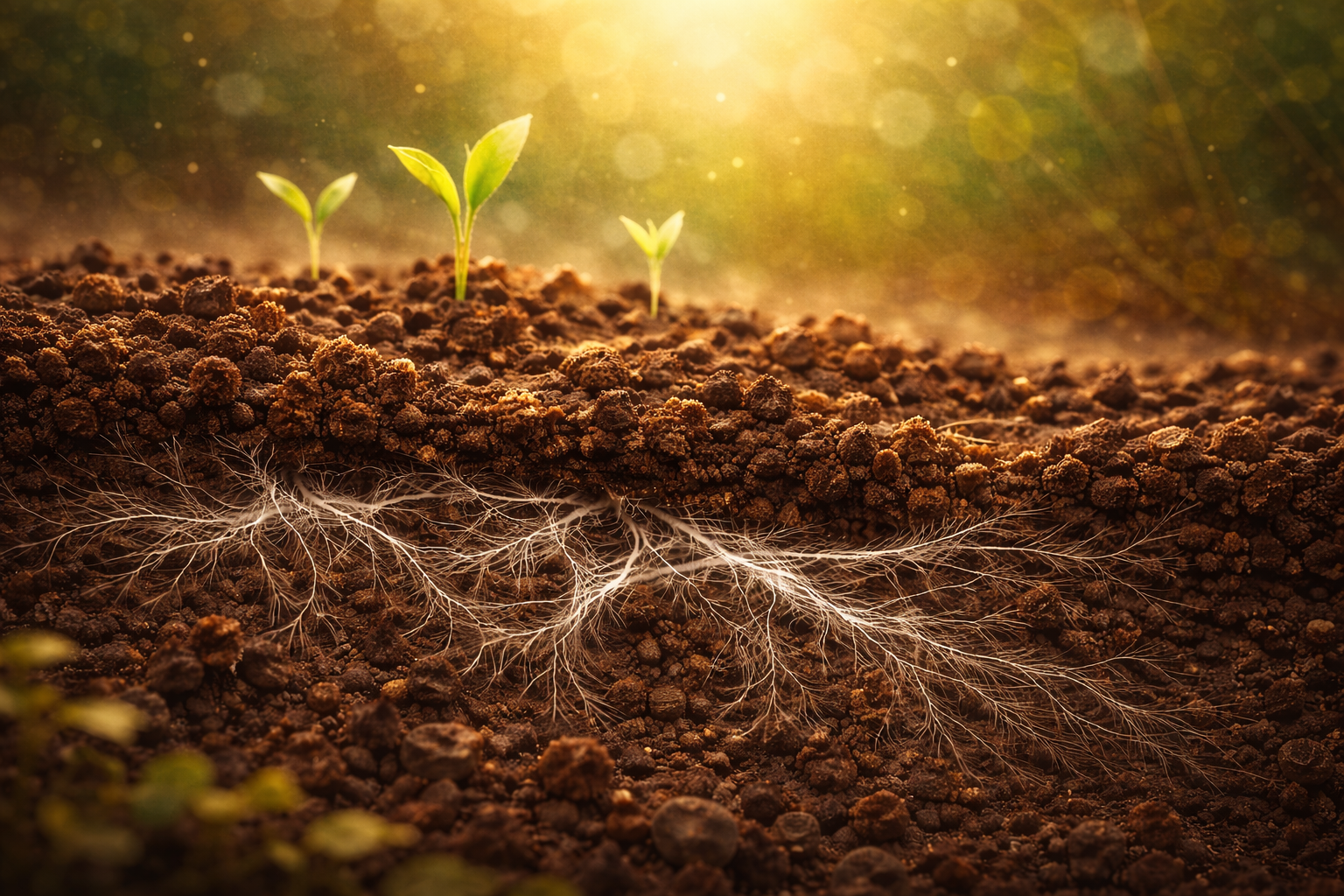
There is a quiet misunderstanding that often sits beneath conversations about living and working “organically.” That to be organic is to be unstructured. That to be intuitive is to be unplanned. That to be wild is to be chaotic. I don’t experience it that way. What I am seeing — more and more clearly — is that everything organic carries its own form of organisation . Not imposed from the outside, but arising from within. The body is a living example of this: chemical reactions, hormonal rhythms, neural pathways - all deeply structured, yet entirely organic. They are not random. They are responsive. Coherent. Alive. Or take the ocean: waves roll toward the shore, shaped by wind, yes — but also by something far more ancient and steady. The pull of the moon. The rhythm of the tides. What looks spontaneous is, in truth, part of a much larger pattern of relationship. The same is true in the natural world all around us. A flock of birds turns in the sky - shifting, folding, expanding - as though moved by a single breath. It feels wild. Unpredictable. And yet there is an intelligence holding it together. A responsiveness between each bird and the ones beside it. No central command, yet no chaos. Bees build hives with exquisite precision. Ants organise in ways that sustain entire colonies. Wolves move as a pack, not randomly, but with an order that protects the vulnerable and ensures survival. Even dolphins, in their playfulness, coordinate in ways that are both instinctive and strategic. There is structure here, but it is not rigid. There is organisation, but it is not forced. It emerges. And I'm realising that this is what it means for me to work in an organic way. It is not the absence of structure. It is the right relationship with structure . For much of my life, organisation felt like something I had to impose. Plans, timelines, strategies - all designed to produce an outcome. There is nothing inherently wrong with that, but it often came with a kind of pressure. A need to hold everything together. What I'm learning now is different. That structure can arise from attentiveness. From noticing where energy gathers. From responding to what is already forming, rather than trying to force something into existence. Even in my work, I can feel this shift. There are plans - yes. There are outlines, ideas, intentions. But they aren't fixed. They move. They adjust. They respond to what is happening around me and within me. They follow the soil, rather than dictating it. And interestingly, nothing has become less organised. If anything, there is a deeper coherence. A quieter order. One that doesn’t need to be controlled to be trusted. Perhaps this is where the confusion lies. We've been taught to see organisation and wildness as opposites. As though one cancels the other out. But nature tells a different story. The wild is not chaotic. It is patterned. It is relational. It is alive with intelligence. And so are we. --------------------------------------------------------------------------------------------- If this resonates, you may already be sensing it in your own life - that pull toward something more fluid, yet not formless… more instinctive, yet not directionless. You don’t have to choose between structure and freedom. There is a way of holding both. And it may already be unfolding beneath your feet.
I recently found myself rewatching one of my favourite films, The Matrix. It wasn’t a casual choice. There was something in me that knew I needed to see it again - this time with the eyes I have now. At first, I wondered if I might feel disappointed. The familiar narrative is clear: a chosen one, a singular saviour, a man destined to rescue humanity. It is a story we have seen countless times, and one that has shaped much of how we understand power and leadership. But as I watched, something unexpected happened. I didn’t feel disappointment. I saw more. Beneath the visible story, another layer revealed itself - one that had always been there, but which I had never fully recognised. It was quieter, less defined, but no less powerful. It was a story of relationship. A story of knowing. A story of what holds everything together when the structures we rely on begin to fracture. Yes, Neo is positioned as “the One.” But nothing in his journey happens in isolation. Morpheus guides him. The Oracle offers insight, not certainty. And in a pivotal moment, it is Trinity’s knowing - her refusal to accept what appears to be true - that calls him back from death. This is not the power we have been taught to look for. It is not loud. It does not dominate. It does not conquer. It recognises. And in that recognition, something shifts. Watching this unfold, I found myself reflecting on some questions that have been forming in my work for some time now: What if the world is not saved by a single figure? What if it is held, rather than rescued… woven, rather than won… grown, rather than imposed? When we look at history, we tend to focus on visible acts of leadership - the moments of decision, intervention, and control. But alongside these, and often beneath them, another kind of power has always been at work. The power that sustains. The power that connects. The power that continues. And so often, it is women who've carried this. Not always named. Not always recognised. But present in the ways families endure, communities adapt, and relationships are held together through complexity and change. This is not about replacing one narrative with another. It is not about positioning women as the new saviours. That would simply replicate the same structure. It is about expanding our understanding of what power is. Because the acts of holding, weaving, sensing, and responding are not secondary. They are foundational. They are the very conditions that make life, leadership, and continuity possible. As I watched The Matrix this time, I realised I hadn’t lost anything of what I loved about it. I had simply gained the ability to see more of what was already there. And in that seeing, something settled. My work is not to dismantle dominant narratives. Others will do that. My role is to call to something deeper—to the wild, untamed, organic power in women that has always existed, even within systems that could not name it. To help women recognise that power. To trust it. And to use it, consciously. Because in the end, it is not a single saviour that sustains us - it is the quiet, enduring power that holds the world.

Learning to Trust Timing in Leadership and Growth
Recently, I sensed two movements within me — one clear, the other still forming. The clarity came from a postgraduate seminar I attended last week. As I listened to the discussion unfold, and particularly to the responses from others in the room, I realised something important: when I present my own work in May, I am likely to encounter similar pushback. Not because the work is weak, but because it touches something deeper - identity, belief, long-held frameworks of meaning. I can prepare for that. Not by sharpening my arguments, but by grounding myself. By expecting resistance without personalising it. By holding a tone that reflects the very essence of my work - awareness without accusation, compassion without the removal of responsibility. I don’t need to resolve discomfort in the room. I only need to hold space for it. Alongside this clarity, something else has been quietly rising: A recognition that much of what has filled my world for the past decade - social media, political commentary, prescribed ways of doing business - no longer feeds me. I still need to remain connected in order to share my work. But I no longer wish to be immersed in that constant stream of noise. It leaves me asking a different question: How do I stay rooted while only lightly touching the surface? There is something unsettling in this shift. Stepping back from constant visibility, from chasing outcomes, from managing how things unfold - it feels, at times, like relinquishing control. And that’s not comfortable. Because control is the only model of power most of us have ever seen. Control plans. Drives. Secures. Measures. But what I am beginning to understand is this: control and power are not the same thing. Control is often a response to uncertainty - an attempt to ensure that something happens. Power, however, does not need to grip. It does not disappear when effort is withdrawn. It remains. This realisation came into sharp focus through a simple exchange. After the seminar, I wrote to the presenter, offering a reflection on his work - particularly on the role of shame in shaping defensive responses. His reply was generous and thoughtful. More than that, he engaged with the idea. He took it seriously. I hadn’t tried to persuade or position. I had simply offered what I saw. And it created movement. That is when I recognised it: This is power, not control. Control seeks to manage outcomes. Power changes the space in which outcomes arise. It does not force agreement. It invites expansion. There is still a sense of fear in this - a loosening of the structures that once provided reassurance. But alongside that fear is something steadier. Not hope, which looks forward and waits to be confirmed. But trust. Trust does not ask, “Will this work?” It says, “I will meet what comes.” And perhaps that is where real power begins - not in holding everything together, but in standing, grounded and present, as life unfolds.

We often think of liminal spaces as waiting rooms. Temporary pauses between what was and what will be. Places we pass through on the way to something more real, more productive, more defined. But what if a liminal space is not a waiting time at all? What if it is a legitimate time in its own right? I am currently in such a space. Not a tourist, not a resident. Here for a month. Long enough to settle, but not long enough to belong in the conventional sense. And in that in-between, something unexpected is emerging. There is no expectation on me here. That, in itself, is different. I have come straight from a performance environment — a global speakers’ conference where identity is shaped through delivery, reception, and visibility. There are clear reference points: audience, outcomes, feedback. You know where you stand. And then… nothing. No stage. No audience. No structure. It is not disorienting in the sense of confusion. It is de-orienting — the removal of orientation altogether. The usual coordinates by which I locate myself have fallen away. And what remains is a question I did not expect to face so directly: Who am I when nothing is required of me? I notice the reflex to produce. The subtle voice that says I should be doing something, achieving something, making use of this time. A lifelong imprint shaped by a work ethic that equates worth with output. But here, that pattern is gently exposed. Because nothing is asking that of me. And in its place, something quieter begins to emerge. Each morning, instead of asking what I need to do, I find myself asking: What is calling me today? It is not a question of discipline in the traditional sense. It is discipline as self-trust. A willingness to listen rather than to impose. Some days, what calls me is observation — the cadence of rain, the movement of birds, the rhythm of a place that does not hurry. Some days, it is rest. Some days, it is thought — a thread that wants to be followed, not forced. Curiosity begins to lead. And I am discovering that curiosity is not distraction. It is direction — just not in a linear form. This space is gently confronting. It reveals how deeply the need to justify time through productivity has been embedded in me. And yet, it is also freeing. Because if creation itself was declared good without needing to achieve or produce, then perhaps there is a form of goodness — of wholeness — that exists simply in being. This month is showing me that being is not the absence of work. It is the ground from which all true work emerges. And perhaps that is the quiet invitation of liminal spaces: Not to rush through them. Not to fill them. But to inhabit them. Fully. Attentively. Trusting that nothing essential is lost in the absence of urgency. This is not an anomaly. It may, in fact, be a more honest way of living.

New Title