

Explore curiosity as a practice that can deepen understanding, challenge assumptions and open new possibilities in leadership, relationships and everyday

Explore the freedom that comes with recognising your choices and reclaiming agency, responsibility and ownership over the direction of your life.
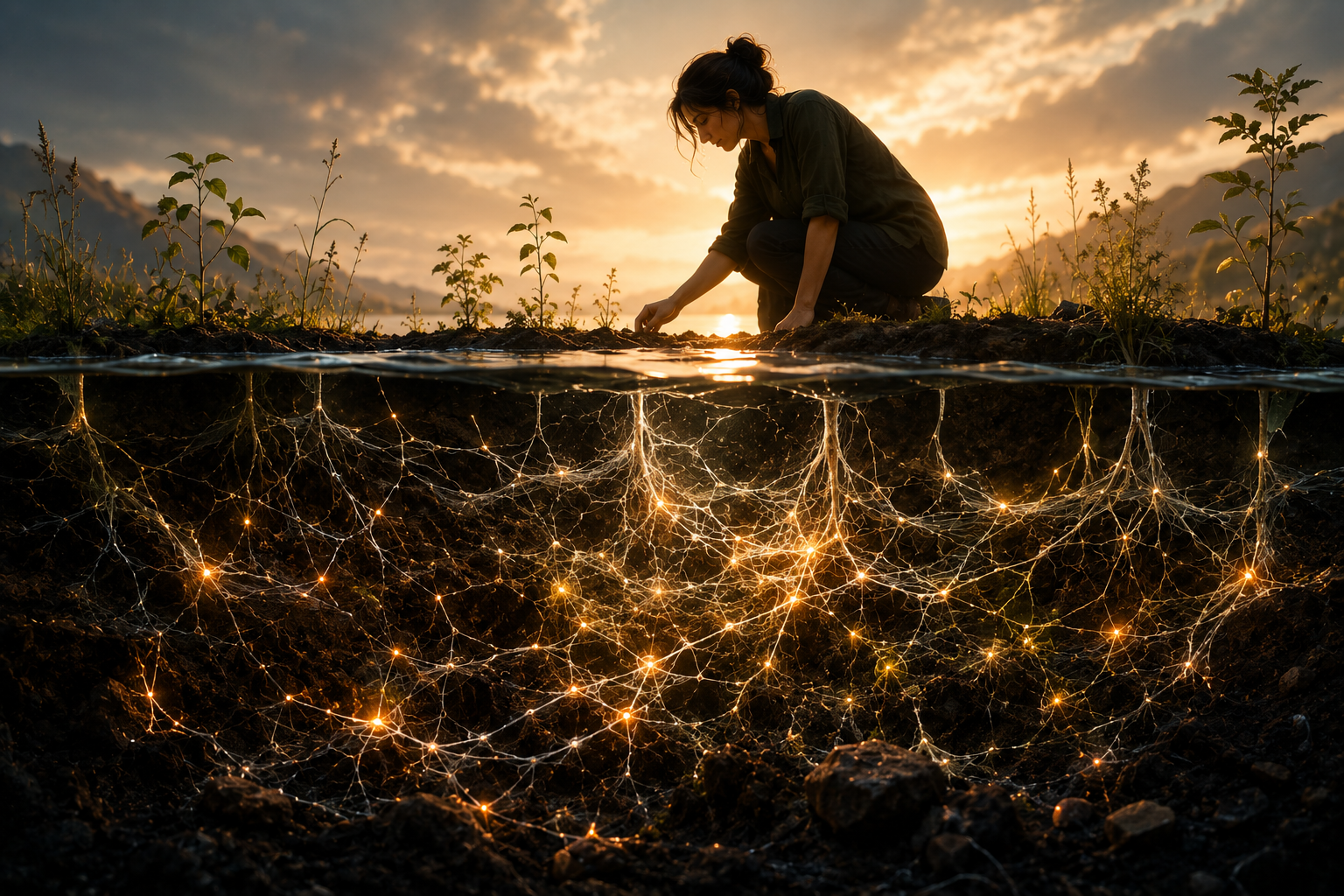
Explore what lies beneath appearances and discover how deeper questions, hidden patterns and unseen influences can change the way we understand ourselves.

Explore the relationships, experiences and systems that sit beneath your work and shape how you lead, connect, create and contribute.
Explore the hidden patterns beneath apparent chaos and discover how paying attention to nature, behavior and experience can reveal deeper connections.

Explore the unseen forms of power that shape our world, relationships and choices, and consider how influence operates beneath the surface.

Learning to Trust Timing in Leadership and Growth
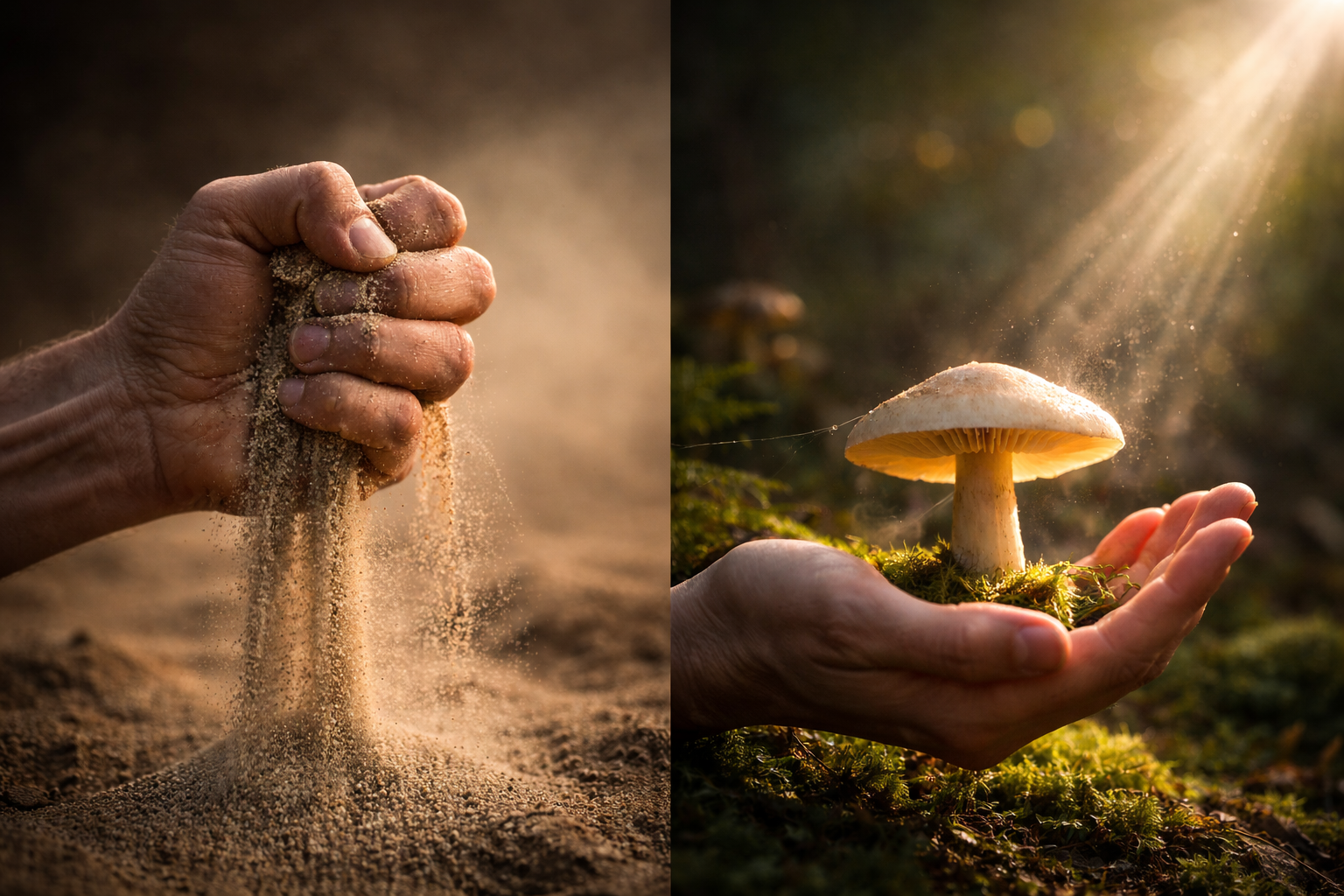
Recently, I sensed two movements within me — one clear, the other still forming. The clarity came from a postgraduate seminar I attended last week. As I listened to the discussion unfold, and particularly to the responses from others in the room, I realised something important: when I present my own work in May, I am likely to encounter similar pushback. Not because the work is weak, but because it touches something deeper - identity, belief, long-held frameworks of meaning. I can prepare for that. Not by sharpening my arguments, but by grounding myself. By expecting resistance without personalising it. By holding a tone that reflects the very essence of my work - awareness without accusation, compassion without the removal of responsibility. I don’t need to resolve discomfort in the room. I only need to hold space for it. Alongside this clarity, something else has been quietly rising: A recognition that much of what has filled my world for the past decade - social media, political commentary, prescribed ways of doing business - no longer feeds me. I still need to remain connected in order to share my work. But I no longer wish to be immersed in that constant stream of noise. It leaves me asking a different question: How do I stay rooted while only lightly touching the surface? There is something unsettling in this shift. Stepping back from constant visibility, from chasing outcomes, from managing how things unfold - it feels, at times, like relinquishing control. And that’s not comfortable. Because control is the only model of power most of us have ever seen. Control plans. Drives. Secures. Measures. But what I am beginning to understand is this: control and power are not the same thing. Control is often a response to uncertainty - an attempt to ensure that something happens. Power, however, does not need to grip. It does not disappear when effort is withdrawn. It remains. This realisation came into sharp focus through a simple exchange. After the seminar, I wrote to the presenter, offering a reflection on his work - particularly on the role of shame in shaping defensive responses. His reply was generous and thoughtful. More than that, he engaged with the idea. He took it seriously. I hadn’t tried to persuade or position. I had simply offered what I saw. And it created movement. That is when I recognised it: This is power, not control. Control seeks to manage outcomes. Power changes the space in which outcomes arise. It does not force agreement. It invites expansion. There is still a sense of fear in this - a loosening of the structures that once provided reassurance. But alongside that fear is something steadier. Not hope, which looks forward and waits to be confirmed. But trust. Trust does not ask, “Will this work?” It says, “I will meet what comes.” And perhaps that is where real power begins - not in holding everything together, but in standing, grounded and present, as life unfolds.

We often think of liminal spaces as waiting rooms. Temporary pauses between what was and what will be. Places we pass through on the way to something more real, more productive, more defined. But what if a liminal space is not a waiting time at all? What if it is a legitimate time in its own right? I am currently in such a space. Not a tourist, not a resident. Here for a month. Long enough to settle, but not long enough to belong in the conventional sense. And in that in-between, something unexpected is emerging. There is no expectation on me here. That, in itself, is different. I have come straight from a performance environment — a global speakers’ conference where identity is shaped through delivery, reception, and visibility. There are clear reference points: audience, outcomes, feedback. You know where you stand. And then… nothing. No stage. No audience. No structure. It is not disorienting in the sense of confusion. It is de-orienting — the removal of orientation altogether. The usual coordinates by which I locate myself have fallen away. And what remains is a question I did not expect to face so directly: Who am I when nothing is required of me? I notice the reflex to produce. The subtle voice that says I should be doing something, achieving something, making use of this time. A lifelong imprint shaped by a work ethic that equates worth with output. But here, that pattern is gently exposed. Because nothing is asking that of me. And in its place, something quieter begins to emerge. Each morning, instead of asking what I need to do, I find myself asking: What is calling me today? It is not a question of discipline in the traditional sense. It is discipline as self-trust. A willingness to listen rather than to impose. Some days, what calls me is observation — the cadence of rain, the movement of birds, the rhythm of a place that does not hurry. Some days, it is rest. Some days, it is thought — a thread that wants to be followed, not forced. Curiosity begins to lead. And I am discovering that curiosity is not distraction. It is direction — just not in a linear form. This space is gently confronting. It reveals how deeply the need to justify time through productivity has been embedded in me. And yet, it is also freeing. Because if creation itself was declared good without needing to achieve or produce, then perhaps there is a form of goodness — of wholeness — that exists simply in being. This month is showing me that being is not the absence of work. It is the ground from which all true work emerges. And perhaps that is the quiet invitation of liminal spaces: Not to rush through them. Not to fill them. But to inhabit them. Fully. Attentively. Trusting that nothing essential is lost in the absence of urgency. This is not an anomaly. It may, in fact, be a more honest way of living.

At a recent speakers’ conference, I noticed a session titled Hooked and Booked. The presentation focused on how to craft talks that “sell themselves.” It clearly designed to help speakers think more strategically about their work. Yet it was the title itself that stayed with me. Hooked and Booked. The phrase is clever, but when I paused to sit with it, I realised how much our professional language is shaped by metaphors of capture and conquest. “Hooked” comes from fishing - the act of catching something, often before it fully realises what has happened. “Booked” turns that moment of capture into a transaction. None of this is unusual. In fact, it reflects the everyday language of business and marketing. We talk about grabbing attention, targeting markets, dominating the stage, winning clients, and closing deals. Much of this language comes from the worlds of warfare, hunting, and competition. And it made me realise something quietly but clearly: these are metaphors I no longer want to live inside. Language is never neutral. The words we choose shape how we understand influence, leadership, and success. If our language comes from warfare or capture, it subtly trains us to believe that power is something exercised over others - something we win, secure, or extract. But what if the world we want to build requires a different language? Much of my work now sits within the framework of Mycelatrix™ , which draws inspiration from the underground networks of mycelium in nature. Mycelial networks do not compete in the way we often imagine. Instead, they connect. They share nutrients. They strengthen the health of the entire ecosystem. In that world, influence looks very different. Instead of hooking people, we invite them. Instead of capturing attention, we resonate with those who recognise something of themselves in the work. Instead of targeting audiences, we speak to communities that already exist. Influence becomes less about capture and far more about recognition. This shift also helped me understand something about my own work as a speaker and writer. Many presentations promise action - practical steps to take tomorrow morning, tactics to implement immediately, strategies to drive results. My work often asks for something different. It asks for reflection. Rather than pushing people toward action, it cultivates recognition - those quiet moments when someone suddenly sees something they had not seen before. Recognition of their own patterns, their leadership, their assumptions, or their influence. Recognition is slower. It cannot be forced or engineered. It ripens in its own time. And perhaps that is why reflection can feel uncomfortable in environments that reward speed, performance, and certainty. Yet reflection is often where real change begins. The words we use matter because they reveal the world we believe in, and the world we are helping to create. When we speak in the language of conquest, we reinforce systems built on competition and control. When we speak in the language of connection, invitation, and growth, we open the possibility of something different. Perhaps one of the quiet superpowers available to all of us is this: To listen carefully to the words we use. To notice when they no longer fit. And to choose language that reflects the world we are ready to live in. Because before we change systems or structures, we almost always change the words.